
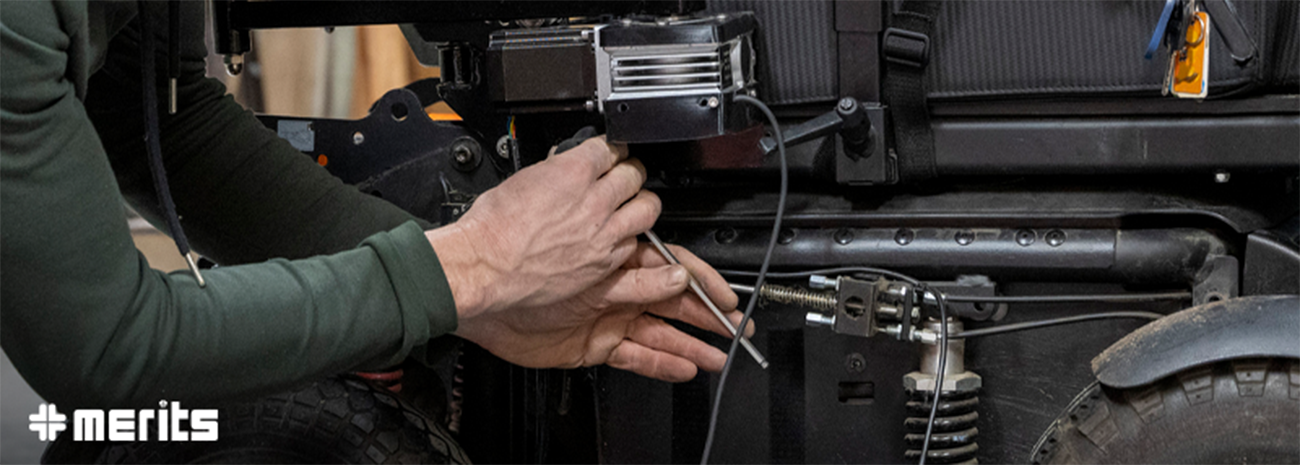
Most power wheelchair maintenance is not about complicated repairs, but about catching small issues before they turn into inconvenient, expensive, or safety-related ones.
A simple maintenance routine helps protect reliability, battery life, comfort, and day-to-day performance. It also helps users and caregivers notice when something has changed before it becomes a bigger problem. Merits provides model-specific owner’s manuals online, but each power wheelchair includes maintenance, operation, and troubleshooting instructions, so this works best as a practical upkeep guide to use alongside your manual, not as a replacement for it.
Why Routine Power Wheelchair Maintenance Matters More Than People Think
A power wheelchair is used in real life, not in a showroom. That means thresholds, sidewalks, ramps, parking lots, tight indoor spaces, dust, moisture, and weather all become part of normal wear.
Routine power wheelchair maintenance helps with the things people care about most: dependable daily use, fewer interruptions, safer driving, longer battery life, and a chair that continues to feel stable and comfortable over time.
What You Can Usually Handle at Home vs. What Should Be Left to a Professional
Good at-home maintenance tasks
At home, most users and caregivers can handle the basics:
- wiping down the chair
- checking battery charging habits
- looking for loose or worn parts
- visually inspecting tires and casters
- checking joystick responsiveness
- paying attention to changes in sound, ride feel, or performance
These are the kinds of habits that make a good electric wheelchair maintenance guide practical rather than overwhelming.
When to call your provider, dealer, or technician
Some issues should not be handled as DIY fixes.
Contact your provider, dealer, or technician if you notice:
- repeated warning indicators
- a clear drop in battery performance
- unusual noises
- worn tires
- damaged casters
- joystick response problems
- loose seating components
- or anything that seems electrical or motor-related
Merits offers troubleshooting and support resources through its owner’s manual and resource pages, which is the best starting point for model-specific next steps. Additionally, check out Merits Basic Troubleshooting Guide.
Monthly Power Wheelchair Maintenance Checks
1. Check battery charging habits
Power wheelchair battery maintenance deserves regular attention. Charge the chair according to the owner’s manual and your normal usage pattern. A good rule is to stay alert for longer charging times, shorter range, or battery performance that feels different from normal. Most battery problems feel subtle before they feel serious.
2. Wipe down high-contact areas
A monthly wipe-down helps more than people realize. Focus on the joystick, armrests, seat surfaces, footplate area, and lower frame areas that collect dust or debris. Power wheelchair cleaning and maintenance does not need to be complicated, but consistency helps.
3. Inspect tires and casters
A simple power wheelchair tire check should include visible wear, debris stuck in the wheels, uneven wear patterns, or anything that looks damaged. Tires and casters affect both safety and ride quality, so even a visual check is worthwhile.
4. Look over the seat, armrests, and footrests
Check for looseness, shifting cushions, worn padding, or anything that feels less secure than usual. These parts take daily contact and often show wear gradually.
5. Pay attention to how the chair feels
This may be the most useful monthly step of all. If the chair starts pulling to one side, vibrating more, responding differently, or making new sounds during driving or turning, that is worth noting. A power wheelchair service schedule works best when it includes not just what you see, but what you feel.
Seasonal Power Wheelchair Maintenance to Keep Up with Weather and Use Changes
Spring and summer checks
Warmer months often mean more outdoor time, which usually means more dust, pollen, dirt, and wear.
Make sure to:
- clean around the wheels and lower frame more often
- pay closer attention to battery performance if the chair is spending more time in heat
- if the chair is being transported more often, it also makes sense to keep an eye on tiedown areas and general wear
Fall and winter checks
Cold, moisture, and debris can all change how a chair performs.
Things to remember:
- wipe down the chair after wet or dirty outings, especially around the lower frame and wheel areas
- battery behavior can also change in colder weather, so it is worth noticing whether range seems shorter or charging seems different
Seasonal storage and charging habits
If the chair is used less during part of the year, the batteries still need proper care. Merits makes model-specific manuals available online, and those manuals are the right place to confirm storage and charging instructions for a particular chair. Indoor storage is generally the safer choice when possible, especially when temperatures are extreme.
Yearly Power Wheelchair Maintenance That Should Not Be Skipped
Schedule a professional inspection
A yearly professional review is one of the smartest things a user or caregiver can do.
This is the right time for a deeper look at:
- frame and hardware condition
- Wheel and caster wear
- battery health
- joystick and control system checks
- seating hardware
- general safety and performance
Review wear-and-tear parts
Tires, arm pads, cushions or covers, and footplate surfaces all take regular use. Even if the chair still drives normally, those everyday-contact parts may need closer attention during a yearly check.
Update your routine if your needs have changed
A maintenance routine should also change when life changes. More outdoor use, a different home environment, more daily miles, or different transfer needs can all affect how often parts need attention.
Battery Care Deserves Its Own Conversation
If there is one area users and caregivers should take seriously, it is battery care. Power wheelchair battery maintenance affects range, reliability, and daily peace of mind.
Good habits usually include:
- regular charging
- watching for shorter range
- and using the model’s manual for charging and storage instructions
Merits power chairs are easy to service, including the Ultra HD, Axcel, and Axcel Narrow, all of which feature tool-free battery access for easier maintenance.
Common Maintenance Mistakes That Cause Bigger Problems Later
A lot of avoidable service issues start the same way:
- waiting until something feels really wrong
- ignoring battery changes
- forgetting seasonal cleaning after outdoor use
- assuming the chair is fine because it still powers on
- skipping yearly service
- not checking the owner’s manual for model-specific care
That is why a power wheelchair maintenance checklist is useful. It turns upkeep into a routine instead of a reaction.
A Simple Power Wheelchair Maintenance Schedule You Can Actually Follow
A practical rhythm might look like this:
Monthly
- check battery habits
- wipe down the chair
- inspect tires and casters
- look over seat, armrests, and footrests
- notice any change in ride feel or sounds
Seasonally
- do a deeper cleaning
- pay attention to weather-related battery changes
- check wheel areas for buildup or debris
- review storage habits
Yearly
- schedule a professional inspection
- review wear parts
- adjust the routine if your daily use has changed
How Merits Can Help
Merits supports this kind of real-world upkeep by providing owner’s manuals, troubleshooting resources, and other support materials online. You can also view warranty information and explore certain Merits models that include service-friendly features like tool-free battery access. The goal is not just repair after something goes wrong. It is dependable daily mobility over time.
A Little Routine Maintenance Goes a Long Way
Monthly, seasonal, and yearly care each play a different role. Monthly checks help you catch small changes. Seasonal attention helps the chair keep up with weather and usage patterns. Yearly service helps protect long-term performance and safety.
Most users do not need to be technicians to do a good job with basic power wheelchair upkeep at home. They just need a simple routine, the right owner’s manual, and the habit of paying attention before small issues become bigger ones.
FAQ: Power Wheelchair Maintenance
How often should a power wheelchair be serviced?
A practical rule of thumb is monthly basic checks, deeper seasonal attention, and a yearly professional review. The best final reference is still the owner’s manual for the specific model.
What maintenance can I do myself on a power wheelchair?
Most users and caregivers can handle cleaning, battery habits, visual inspections, and watching for changes in performance or comfort. More technical or electrical problems should go to a provider or technician.
How do I take care of a power wheelchair battery?
Charge it regularly, watch for shorter range or longer charging times, and follow the model-specific manual for battery care and storage instructions. Merits provides those manuals online.
Should I clean my power wheelchair regularly?
Yes. Regular cleaning helps keep high-contact surfaces and lower frame areas free of dust, dirt, and debris that build up during normal use.
What are signs my power wheelchair needs service?
Watch for unusual noises, reduced range, pulling to one side, joystick issues, visible tire wear, or anything that feels less stable than usual.
Does weather affect power wheelchair maintenance?
Yes. Heat, cold, moisture, and dirt can all affect battery performance, cleanliness, and wear over time.
Where can I find maintenance instructions for my Merits power wheelchair?
Merits provides model-specific owner’s manuals online through its owner’s manual page.