If a wheelchair user develops redness, discomfort, or skin breakdown, the problem usually did not start that day. It started earlier, often with pressure that built slowly over time through long sitting periods, limited movement, poor alignment, missed repositioning, or a seating setup that made pressure relief hard to do consistently.
That is what makes pressure injury prevention in wheelchair users such an important part of daily mobility planning. It is not just a wound-care issue. It affects comfort, sitting tolerance, independence, caregiver burden, hospitalization risk, and whether a user can stay engaged in the routines that matter most.
For ATPs, therapists, DME and HME providers, and clinical teams supporting seating and mobility, the goal is not just to recommend pressure management in theory. It is to build a wheelchair pressure relief protocol that works in real life.
At Merits Health Products, that means looking at prevention through a practical lens: how the user sits, how often they can reposition, what their seating system supports, and what makes pressure relief realistic throughout the day.
What Causes Pressure Injuries in Wheelchair Users?
Pressure injuries develop when tissue is exposed to more pressure than it can tolerate for too long by reducing or entirely cutting off blood flow, resulting in tissue destruction. In wheelchair users, that usually happens over bony areas like the ischial tuberosities, sacrum, or coccyx.
But pressure is not the only issue.
In seated mobility users, skin breakdown often results from a combination of:
- sustained pressure
- shear from sliding or poor positioning
- friction during movement or transfers
- moisture that makes skin more vulnerable
This is why wheelchair users are at higher risk than many people realize. Sitting may look passive, but from a tissue-loading standpoint, it is not. The body is carrying weight through a relatively small contact area, often for hours at a time, and many users cannot shift enough on their own to offload those tissues effectively.
That risk goes up even more when the user has limited sensation, poor endurance, reduced trunk control, or a posture that collapses over time.
In other words, pressure injuries are rarely just about “being in the chair too long.” They are usually the result of pressure plus positioning plus limited movement.
Core Principles of Pressure Injury Prevention
There are a lot of ways to talk about pressure ulcer prevention seating, but the most useful framework is simple: redistribute pressure, support movement, maintain alignment, and catch early warning signs before they become bigger problems.
1. Pressure redistribution
The first principle is reducing concentrated loading.
That is where cushions and seating systems matter. A properly selected seating surface helps distribute pressure more effectively, reduces peak loading under vulnerable areas, and supports the user’s posture at the same time.
What does not work well is assuming the user can simply “sit differently” and solve the issue. If posture is unstable, fatigue sets in, that approach usually breaks down quickly.
2. Regular repositioning
Lorem ipsum dolor sit amet, consectetur adipiscing elit. Ut elit tellus, luctus nec ullamcorper mattis, pulvinar dapibus leo.
3. Postural support and alignment
Poor alignment increases localized pressure and often increases shear too.
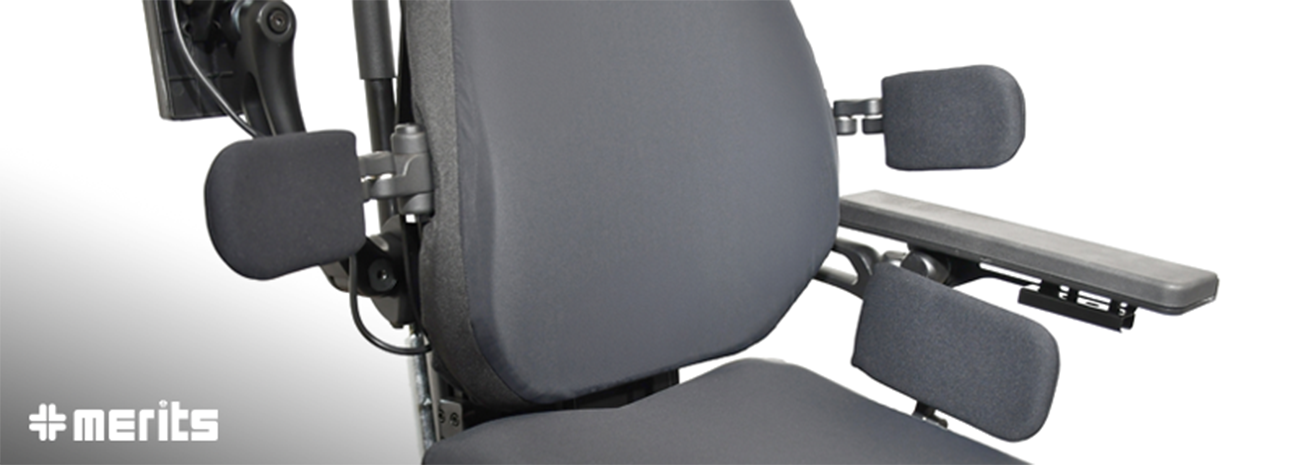
If the pelvis rolls back, the trunk collapses, or the user slides forward over time, pressure is no longer being managed the way the seating system intended. That is where back support, lateral positioning, seat angle, and overall posture support become more than “comfort” features. They directly affect skin risk.
4. Skin monitoring and early intervention
Pressure injury prevention also depends on noticing problems early.
Daily skin checks matter, especially for users with impaired sensation or a history of skin breakdown. Persistent redness, discoloration, warmth, tenderness, or areas that do not return to baseline after pressure is relieved should not be ignored.
The earlier a problem is identified, the easier it is to address before it becomes a wound.
Wheelchair Pressure Relief Techniques That Actually Work
There is no one pressure relief technique that works for every wheelchair user. The right strategy depends on strength, balance, cognition, endurance, sensation, and whether the user can reposition independently.
Manual pressure relief techniques
For some users, manual pressure relief may include:
- leaning forward
- side-to-side weight shifts
- wheelchair push-ups, when appropriate
These techniques can help, but only if the user can do them safely and consistently. That is where clinical reality matters. A pressure relief maneuver that works once during an evaluation is not necessarily the same as one the user can repeat all day, every day.
A good question to ask is not just, “Can they do this?” but “Can they do this reliably when they are tired, distracted, or in their actual environment?”
Power seating functions for pressure relief
For users who cannot perform effective manual weight shifts, power seating becomes much more important.
Tilt is generally the primary feature for pressure redistribution because it changes orientation and helps offload tissue without requiring the user to support themselves through the arms. Recline can play a supportive role in a broader positioning strategy, especially when used in combination with tilt.
This matters for many higher-risk users because the issue is not understanding the need for pressure relief. It is having a realistic way to do it.
That is where pressure relief power wheelchair functions can make a major difference. They help turn pressure management from a recommendation into something the user can actually carry out.
How Often Should Wheelchair Users Reposition?
Most wheelchair users should perform pressure relief every 15 to 30 minutes, with the position change held long enough to allow tissue reperfusion.
That is useful general guidance, but it should not be treated like a one-size-fits-all rule. How often to reposition a wheelchair patient depends on factors like:
- history of skin breakdown
- sensation
- endurance
- cognition
- trunk control
- fatigue
- how many hours they spend in the chair
- whether pressure relief is manual or power-assisted
This is also where consistency matters more than perfection.
A user may know they are supposed to do pressure relief every 15 to 30 minutes, but if fatigue, environment, or limited function makes that unrealistic, the plan needs to change. Sometimes that means caregiver support. Sometimes it means better prompts. Sometimes it means a power seating strategy that reduces the physical demand of repositioning.
The Role of Cushions and Seating Systems in Pressure Prevention
When people ask about the best cushion for pressure sores in wheelchair users, the honest answer is that there is no universal best option.
What matters is matching the cushion to the person.
Common cushion categories include:
- Foam cushions, which may offer stability, support, and simplicity
- Gel cushions, which may help with pressure distribution and immersion
- Air cushions, which are often considered for higher-risk users but require proper setup and maintenance
The important part is that the cushion needs to do more than feel comfortable for a few minutes. It needs to support posture, function, and pressure management over time.
That is where fit and maintenance matter just as much as material choice. An air cushion that is not inflated correctly or a cushion that does not match the user’s posture can undermine the entire seating setup.
This is also where the Precision Comfort® seating philosophy fits well. Pressure prevention works best when the cushion is part of a larger positioning strategy, not treated as a standalone fix.
A cushion can help redistribute pressure. It cannot replace repositioning. And it cannot fully solve poor alignment on its own.
Read More: Precision Comfort: Seating & Positioning for Better Outcomes
How Power Seating Systems Support Pressure Injury Prevention
When clinicians think about tilt, recline, and power seat elevation, it helps to think function first.
Tilt supports pressure redistribution by changing the body’s orientation and reducing load through vulnerable seated areas. Recline can support positioning and pressure management as part of a coordinated strategy, especially when posture, fatigue, or range limitations are involved.
Power seat elevation is not primarily a pressure relief feature, but it can still support skin protection indirectly. Better transfer mechanics may reduce shear during transfers, and improved access to surfaces may reduce the awkward movements that contribute to instability or skin trauma.
The bigger point is this: power seating features often support pressure injury prevention not because they are “nice to have,” but because they help users reposition more effectively, more consistently, and with less physical demand.
Related: Power Seat Elevation in Group 2 Chairs: What Providers Should Know
What ATPs and Clinicians Should Evaluate
When skin breakdown risk is part of the picture, the evaluation needs to go beyond the seating surface alone.
A few of the biggest questions to ask are:
- Does the user have a history of pressure injuries?
- Is sensation impaired?
- Can they perform pressure relief on their own?
- Do they maintain posture over time, or do they collapse or slide?
- How many hours are they spending in the chair each day?
- What does their home setup allow?
- Are transfers contributing to shear or instability?
This is where outcomes-based decision making matters.
A user may do well during a short clinic session and still struggle by hour four at home. Fatigue, asymmetry, caregiver availability, and environment all shape whether a pressure prevention strategy will hold up in daily use.
Common Mistakes That Lead to Pressure Injuries
Pressure injuries often develop through a series of small misses rather than one dramatic failure.
Common problems include:
- relying on cushions without repositioning
- incorrect cushion inflation or setup
- assuming the user will remember pressure relief without support
- poor seating alignment that worsens throughout the day
- ignoring early skin changes
- choosing a seating solution that protects pressure but reduces stability so much that function gets worse
This last point is important. Pressure management and function are not opposites. In many cases, better stability improves pressure outcomes because the user is less likely to slide, shear, or collapse into asymmetrical loading.
How Medicare and Documentation Fit In
From a documentation standpoint, pressure relief needs often help support tilt, recline, and specialized seating justification.
The strongest documentation usually connects three things clearly: risk, function, and equipment. In other words, why is the user at risk, what are they unable to do effectively or safely, and what equipment function addresses that problem?
That approach tends to hold up much better than simply listing features. It also aligns better with how ATPs, therapists, and providers already think clinically.
Continue Reading
How Merits Supports Pressure Injury Prevention
At Merits, pressure injury prevention is part of a broader function-first approach to seating and mobility. That includes support for seating systems, positioning strategies, and power seating options that make pressure relief more achievable in daily life.
The goal is not to overcomplicate the conversation or turn prevention into a product pitch. It is to support better real-world outcomes through equipment that aligns with clinical reasoning and everyday use.
Prevention Is Built Into Daily Use, Not Occasional Adjustments
Pressure sore prevention for wheelchair users works best when it is built into the day. That means the right seating setup. The right support for posture. A realistic repositioning plan. Equipment the user can actually use. And a clinical approach that looks at what happens over time, not just what looks good in the first 15 minutes.
The best outcomes usually come from the same formula: the right setup plus consistent use.
If you are evaluating seating, positioning, or power mobility options that support pressure injury prevention, explore Merits resources or connect with the team to learn more.
FAQ: Pressure Injury Prevention for Wheelchair Users
How do wheelchair users prevent pressure sores?
Wheelchair users help prevent pressure sores through regular
repositioning, appropriate cushions, good seating alignment, daily skin checks,
and seating systems that support pressure redistribution throughout the day.
How often should pressure relief be performed in a wheelchair?
General guidance is every 15 to 30 minutes, with position
changes held long enough to allow tissue reperfusion. The exact schedule
depends on the user’s risk level, endurance, sensation, and ability to
reposition.
Is tilt or recline better for pressure relief?
Tilt is generally the primary feature for pressure
redistribution. Recline can support pressure management and positioning,
especially when used in combination with tilt.
What type of cushion is best for preventing pressure injuries?
It depends on the user’s needs. Foam, gel, and air cushions
can all play a role. For higher-risk users, air or gel options are often
considered, but fit, setup, and maintenance matter just as much as cushion
type.
Can power wheelchairs help prevent pressure injuries?
Yes. Power wheelchairs with tilt and recline can help users
who cannot perform effective manual pressure relief on their own and can make
repositioning more realistic throughout the day.
What are early signs of a pressure injury?
Early signs can include redness, skin discoloration, warmth,
tenderness, or an area that does not return to its normal appearance after
pressure is relieved.